


Every week the energy world moves faster than most people realize. Markets shift, rules change, and new tech gets tested in real time. Some stories make headlines, others stay buried, but they all shape the work in the field.
Project Vanguard tracks it through a simple lens. What keeps the lights on. What keeps energy affordable. What strengthens American competitiveness. Think of this as your weekly sitrep for the grid, minus the PowerPoint and the 40-minute meeting that should have been an email.
This week’s pattern is simple. Load is rising fast. America is finally building and planning fast enough to matter.

1. Grid equipment makers invest in US to ease supply shortage | Reuters
The most important grid story this week isn’t flashy. It’s factories. Big ones, building the hardware everything else depends on.
“Surging demand for U.S. power transmission equipment has boosted the outlook for suppliers and led to a wave of investments in new factories. In September, Hitachi Energy announced more than $1 billion of investments in U.S. manufacturing infrastructure for grid components. Siemens, GE, Hyosung HICO and WEG have also announced significant investments.
Demand for U.S. generation step-up transformers soared by 274% between 2019 and 2025, according to Wood Mackenzie. Average delivery times were 143 weeks for GSUs and 128 weeks for power transformers in the second quarter of 2025.
Hitachi’s planned investments include $457 million for a new large power transformer facility in south Boston and $106 million for component manufacturing in Alamo, Tennessee. Siemens is building a $150 million transformer factory in Charlotte, North Carolina, due for completion in early 2026. (more investments listed in the article)”
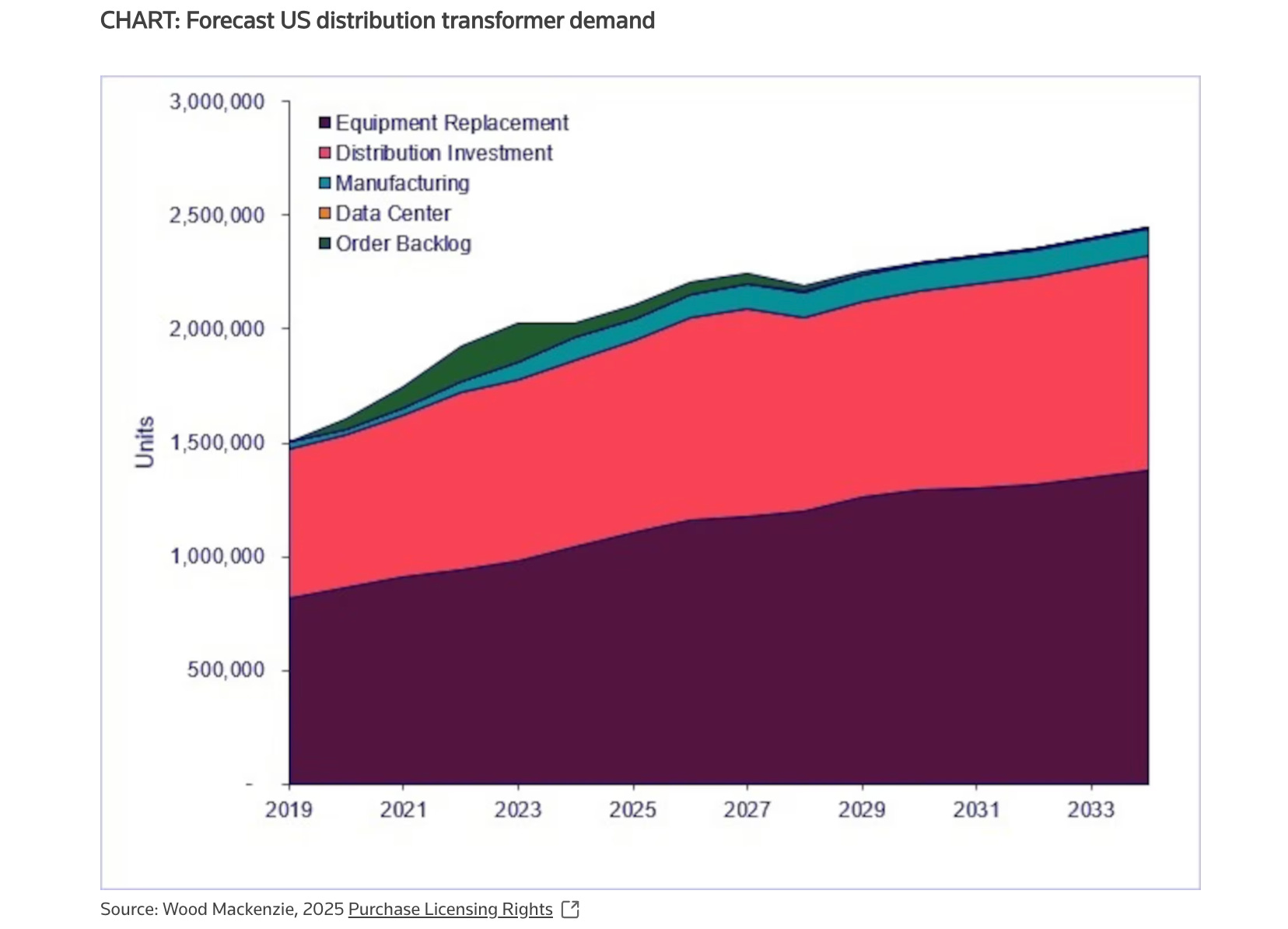
This is the quiet kind of good news that matters. You can debate policy all day, but nothing gets built without GSUs, breakers and switchgear. A 274 percent surge in demand with three-year lead times is a real grid vulnerability, and manufacturers are finally responding with billion-dollar plants.
For veterans and operators, this is both opportunity and mission. These facilities need people who understand logistics, reliability and disciplined processes. And until this new capacity comes online, every project timeline still hangs on whether the right piece of hardware shows up when it’s supposed to.
2. US solar stocks rebound from Trump’s clean energy rollback | Financial Times
Solar spent most of 2024 in retreat. This week, the sector showed real momentum again as policy uncertainty cleared and demand kept rising.
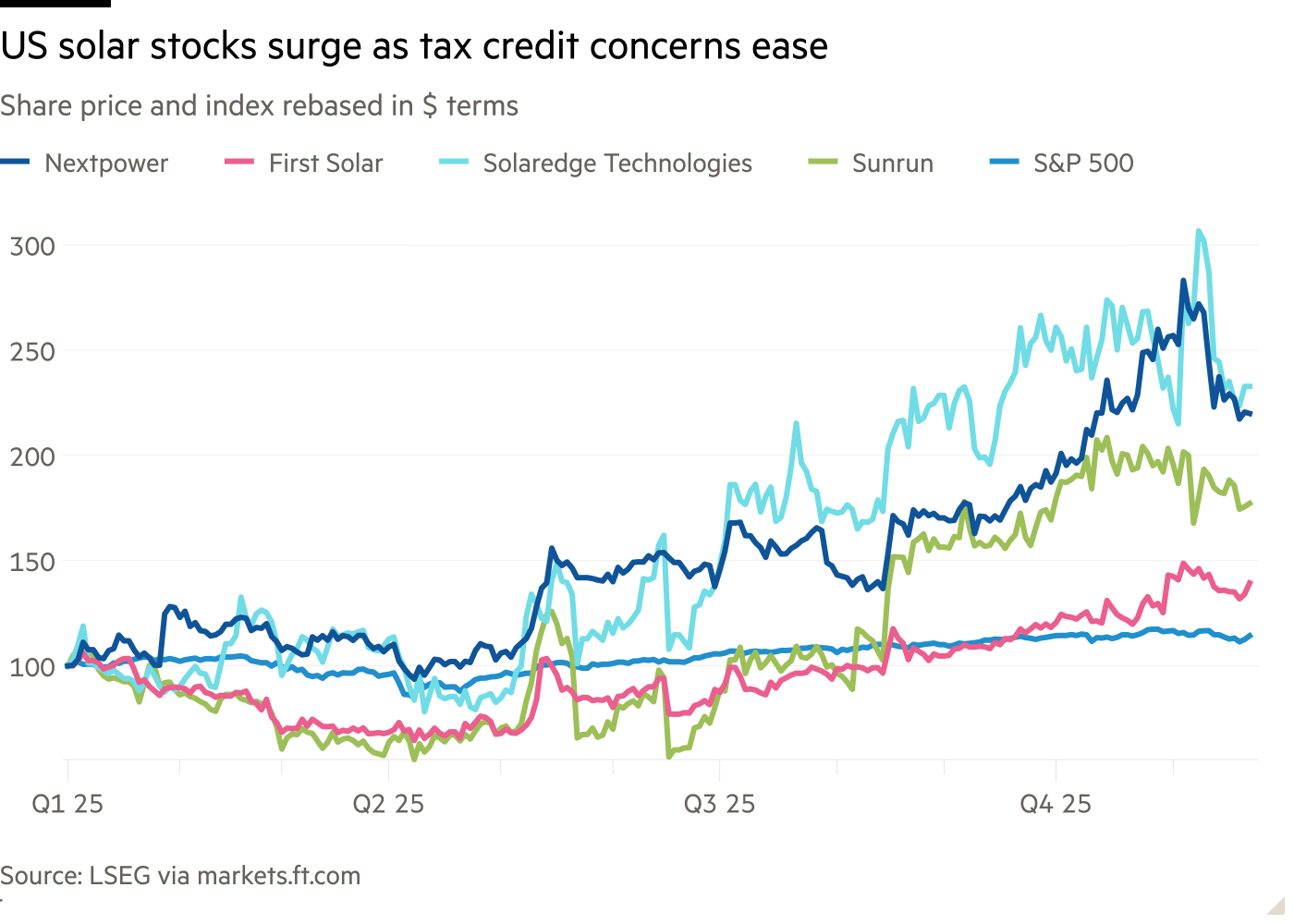
“US solar stocks have been on a bumpy ride this year, with investors fleeing the sector over fears that the Trump administration would end lucrative tax credits for the industry. But sentiment has since shifted and a group of solar stocks are on track for double- and triple-digit gains in 2025 that outpace the S&P 500.
Shares of Nextpower, Sunrun, First Solar and SolarEdge are up 120, 77, 39 and 133 per cent, respectively, since the start of the year. Many investors feared that the Trump administration would be hostile to an industry that had enjoyed expanded tax credits under the Inflation Reduction Act. Although the ‘One Big Beautiful Bill’ still phased out some subsidies, many in the industry viewed the timeline as more favourable than expected.
The final version of the OBBB ‘was not nearly as bad as the market had expected,’ said Christine Cho of Barclays. ‘In a lot of ways a large majority of the IRA was really kept intact.’
Utility-scale solar is the fastest technology to deploy to the grid, since a gas turbine shortage has delayed new natural gas plants. The US Energy Information Administration reported that solar would account for half of new generating capacity this year.”
Solar’s rebound isn’t vibes, it’s velocity. When gas turbine shortages collide with AI demand, the fastest tool wins, and right now that’s utility-scale solar.
The sector didn’t revive because of ideology, it revived because the grid needed capacity and solar could show up on time. For veterans and operators, this is a reminder that the US energy system rewards whoever can deliver megawatts the fastest and most reliably.
3. MISO to speed up power plant grid connections after US approval | Reuters
When load jumps faster than the paperwork moves, something’s gotta give. This week, MISO decided it’s the paperwork. The operator is standing up a temporary fast-track to get new generation connected before data-center demand leaves the grid wheezing.
“MISO… will fast-track the process for new power plants to connect to the grid after U.S. federal regulators approved the plan. U.S. grids have seen demand shoot up in recent months from Big Tech data centers, sending the country’s electricity consumption to record highs and creating a sudden urgency to quickly add new electricity supplies.
MISO… will reduce the interconnection study process time for some power plant projects… a temporary and targeted solution designed to bring urgently needed generation resources online quickly amid unprecedented load growth and increasing reliability challenges.
A maximum of 68 projects will be processed under the expedited program, which will sunset by August 31, 2027. The projects must show they can be up and running in three-to-six years.
MISO will start accepting the expedited interconnection requests next month, with the first quarterly study starting on September 2.”
This is what it looks like when grid operators stop admiring the problem and start moving. Sixty-eight projects might not sound like much, but in the interconnection world that’s practically a sprint.
Veterans get it: when the mission shifts, you don’t wait for the ideal plan, you clear a lane and let the units that can move, move.
4. NERC Winter Reliability Assessment | Report
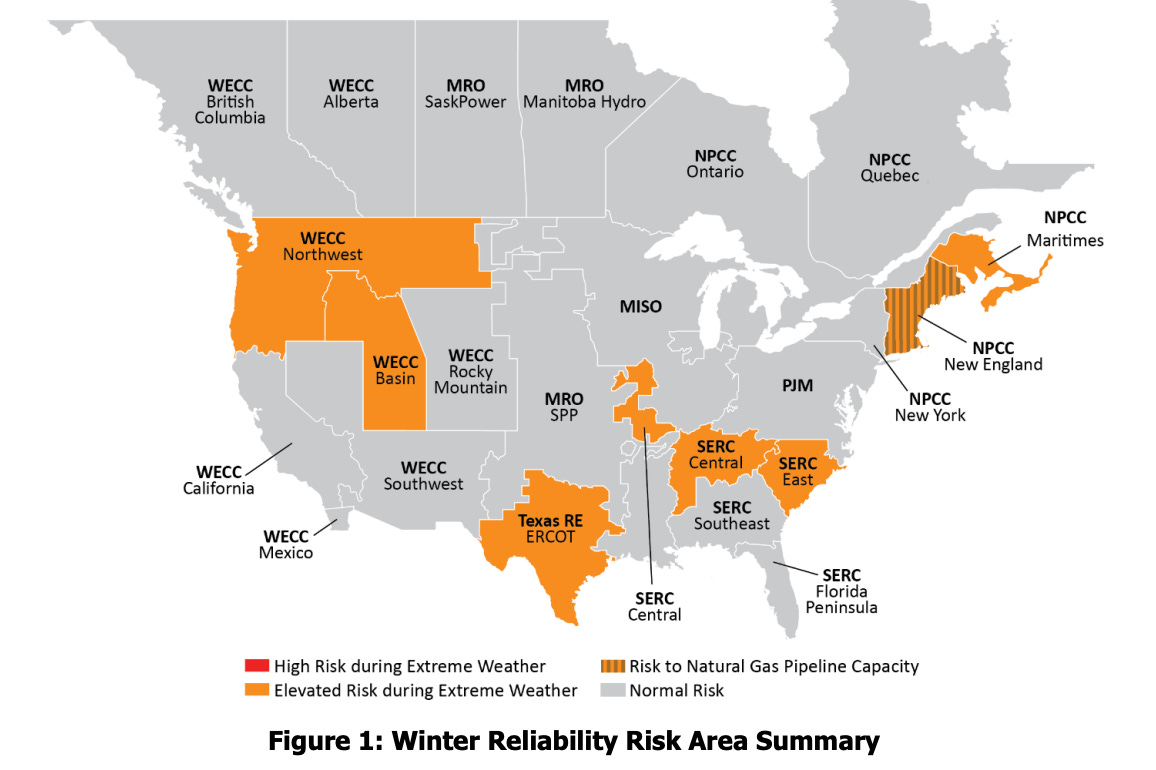
NERC’s winter report isn’t cheerful, but it is clear. Demand is rising faster than supply, and several regions are exposed if the cold sticks around. The good news, buried under the warnings, is that operators are showing real gains in winter readiness.
“Two trends affecting resource adequacy across the BPS for the upcoming winter are rising electricity demand forecasts and a continued shift in the resource mix characterized by the retirement of thermal generators and growth in battery resources. After years of flat or low (~1%) peak demand growth, the aggregate peak demand for all NERC assessment areas has risen by 20 GW (2.5%) since the previous winter. Nearly all assessment areas are reporting year-on-year demand growth; some are forecasting increases near 10%. Total BPS resources have also increased since last winter, but by a smaller amount of 9.4 GW. This number includes the net change in generating capacity as well as additional demand response.”
“All areas are assessed as having adequate resources for normal winter peak-load conditions (i.e., the area’s 50-50 peak forecast). However, more extreme winter conditions extending over a wide area could result in electricity supply shortfalls. Prolonged, wide-area cold snaps can drive sharp increases in electricity demand and threaten reliable BPS generation and the availability of fuel supplies for natural-gas-fired generation.”
This is a classic “good news inside the bad news” report. The grid is still tight, but operators are sharper, better drilled and better equipped than the winters after Uri and Elliott.
Veterans know this mode well: acknowledge the threat, tighten the playbook and keep the team ready. Winter is the same enemy it’s always been, it just finds new ways to test the logistics chain.
5. Power Demand Forecasts Revised Up for Third Year Running, Led by Data Centers - Grid Strategies Report
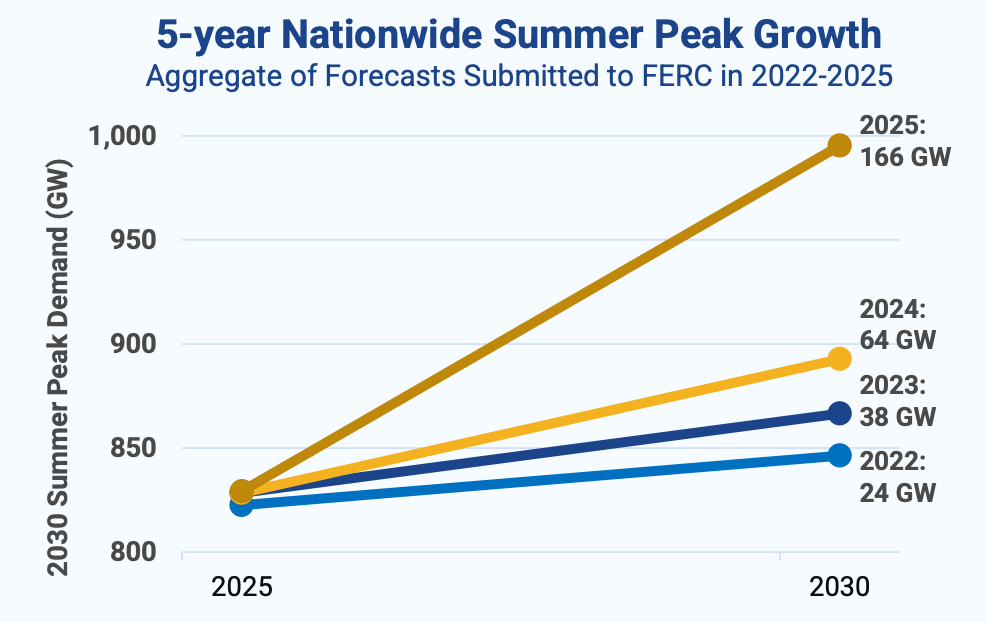
The Grid Strategies report puts hard numbers to what everyone in the field already feels — the era of flat demand is over. Load is climbing fast, and every year the forecast gets revised higher. This is the terrain we’re fighting on.
“Electricity usage is forecast to grow by an average of 5.7% per year over the next five years, with peak demand growth forecast at 166 GW, a 3.7% annual rate.”
“Over the past three years, the 5-year forecast of utility peak load growth has increased by more than a factor of six, from 24 GW to 166 GW.”
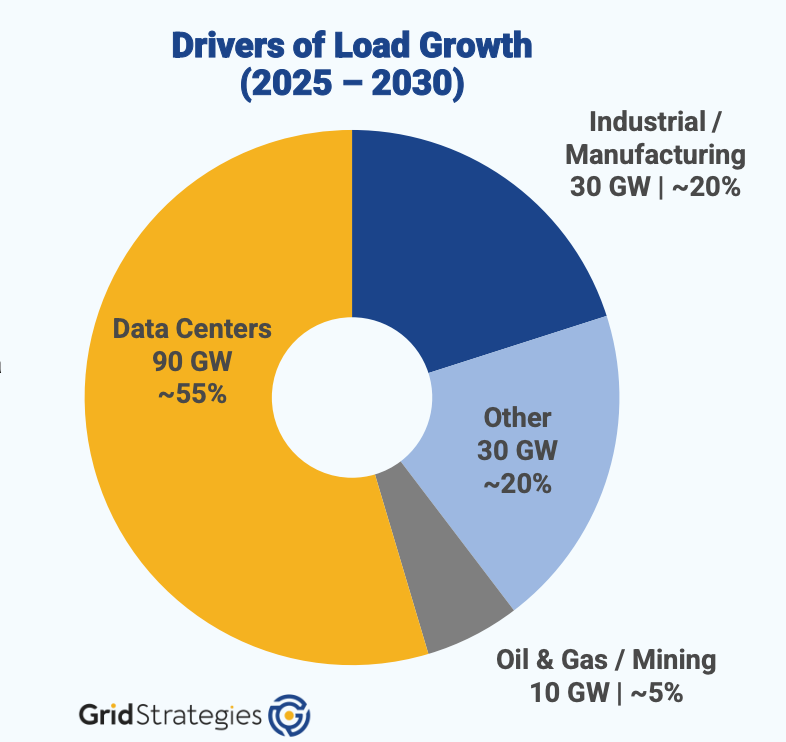
“Data centers are the largest driver of demand and energy growth, accounting for about 55% of demand growth in utility load forecasts over the next five years.”
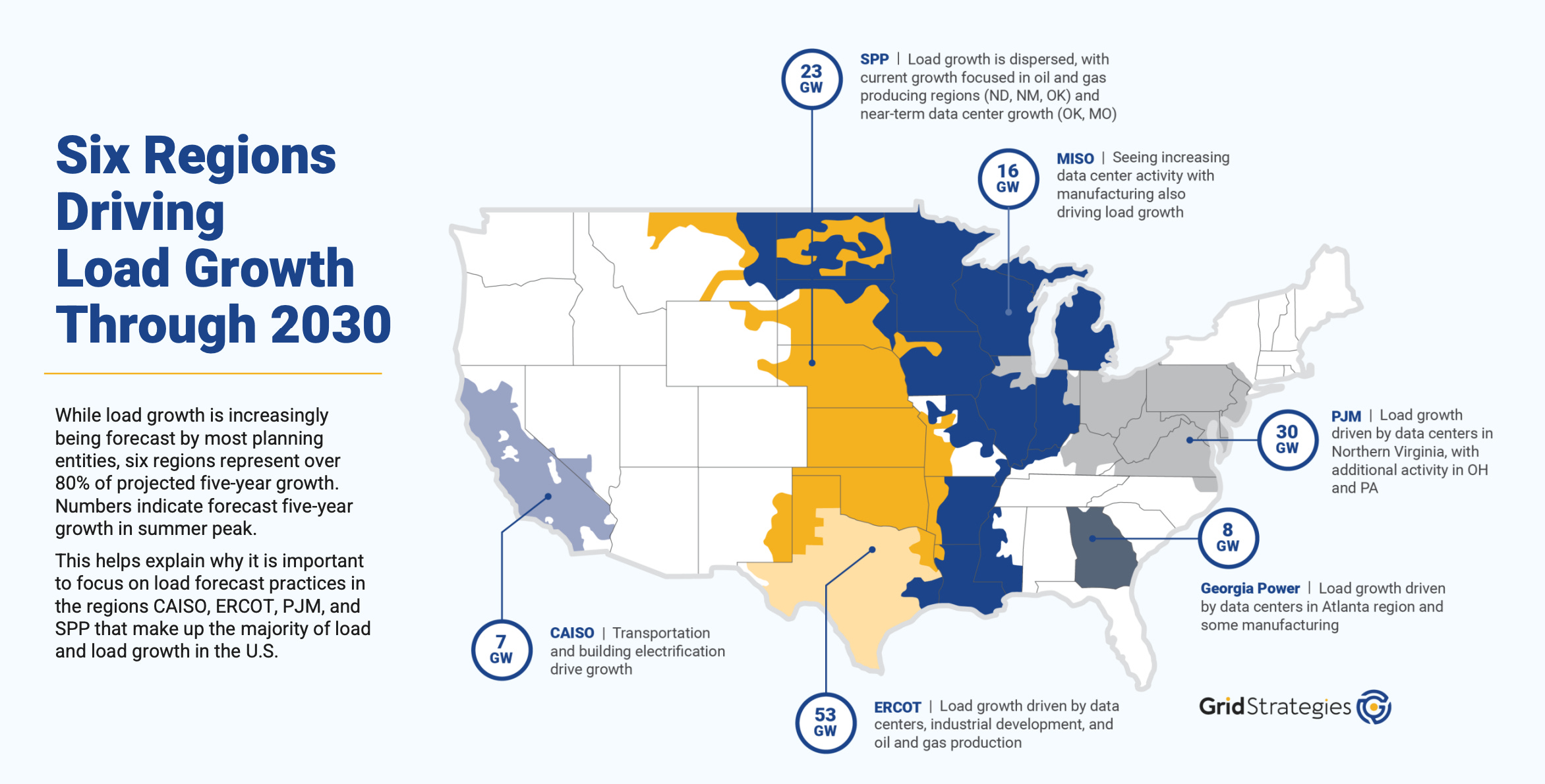
This is one of the clearest signals yet that America’s grid is entering a new operating environment. When peak demand grows sixfold in three years, you don’t have a “trend,” you have a mission.
The upside is simple: big load means big opportunity. Steel, substations, logistics, operations, planning, all of it scales.
The challenge is equally simple: we are now racing the forecast, not coasting behind it. The teams that can build, adapt, and deliver megawatts fastest are the ones who will keep the country ahead of the curve.
6. Podcast Pick: A feast of hot takes: The defining stories of 2025 | Open Circuit
Latitude Media’s year-end roundtable hits on the biggest trend lines shaping the sector, and it pairs cleanly with this week’s theme of momentum beating headwinds. The conversation isn’t doomscrolling, it’s a clear look at the forces reshaping reliability, markets and project velocity.
“2025 was the year when the load curve finally broke through every legacy forecast.”
The hosts walk through the big drivers, from AI demand growth and industrial reshoring to the return of serious transmission planning. They also flag where politics caused turbulence, but stopped short of derailing the fundamentals.
“Even with policy swings, the buildout kept moving because the demand story never slowed down.”
“This is no longer a one-for-one replacement game. It’s an all-of-the-above expansion to keep up with growth.”
For veterans, it’s a useful high-level snapshot from people who track the data week to week. It’s grounded, fast-paced and connects the dots across markets in a way operators will appreciate.
Why This Week Matters
If you only take one thing from this brief, take this: the system is bending toward solutions, not collapse.
U.S. manufacturers are reinvesting.
Grid operators are moving faster.
Communities are shaping projects.
Regulators are preparing for the big load era, not ignoring it.
There is plenty of friction left, but veterans understand this mindset: when you see coordinated movement across logistics, equipment, planning, and communication, you know the mission has momentum.
Reliable power.
Clear communication.
Veteran execution.
That is how we keep American energy strong through the winter and ready for the next generation of load.