


Welcome to 2026.
The year opened with a reminder most veterans don’t need explained: when energy gets unstable, everything else follows.
Venezuela went from background noise to front-page reality. Fast. Maduro’s out. Oil majors are in. Meanwhile, the U.S. stepped in with the stated goal of stabilizing the country, with American companies expected to finance and operate the rebuild.
First of all, I just want to highlight the extreme technical and tactical exhibition a combined arms effort put in during the raid that extracted Maduro. There’s a lot of jaws hanging open seeing the operational excellence demonstrated that night.
Now, let’s hope we’re not looking at Iraq 2.0 in implementing regime change.
Markets and geopolitical actors have been quick to react, but the implications will take a while to shake out. Strip away the talking heads and the throughline is clear. This wasn’t just an oil move. It was a minerals move. That’s why Greenland is being talked about again on the heels of Venezuela.
Control of critical resources has shifted from a background concern to an explicit strategy, and everyone noticed.
“You have steel, you have minerals, all the critical minerals,” Commerce Secretary Howard Lutnick told reporters aboard Air Force One with President Trump late Sunday. “They have a great mining history that’s gone rusty.
That framing matters. BRICS nations responded quickly. European governments paid attention. Colombia’s president publicly pushed back with a “come and get me.” What would have sounded like saber-rattling a year ago now reads as contingency planning. In a matter of days, the previously politically impossible moved into the realm of the thinkable.
That shift is the story.
The energy world has always been a live case study in how history repeats itself. When energy becomes uncertain, debate gives way to action. Rules soften. Lines blur. Timelines compress.
Zoom out and the pattern is familiar. Under pressure, nations pull two levers. One outward: secure supply directly. The other inward: build systems that rely less on fragile supply chains and friendly politics. Anyone who’s planned real logistics knows those aren’t competing strategies. They’re layers. You don’t pick one and hope. You stack them.
What makes this moment different is what’s happening quietly elsewhere. Africa just set a record for clean energy installations, driven less by climate rhetoric and more by reliability, independence, and cost. When imports are risky, domestic power stops being a preference and starts being a security asset. That lesson isn’t ideological. It’s learned the hard way.
That’s the backdrop for this week’s reads. Oil, grids, clean energy, and planning reform are no longer separate conversations. They’re one operating picture. And 2026 made that clear early.
Markets Reprice Control, Not Just Commodities
Markets usually move before policy memos catch up. The last two weeks were no exception.
U.S.-linked critical minerals stocks have quietly firmed up. Not a surge. A reweighting. Lithium, uranium, copper, and rare earths tied to domestic projects have seen renewed buying as Venezuela put resource control back on the table and tariffs crept into forward assumptions. The key signal is timing. The move abroad and the push to lock in supply at home are happening at the same moment, under the same logic.
“Trump touched only briefly on rare earths in his remarks, but geologists strongly believe Venezuela also has vast stores of various rare-earth and critical minerals,” added Fung. “The potential for extracting such riches from Venezuelan soil has been barely (and inefficiently) tapped, and what little has been tapped has generally ended up in China.” - Barrons
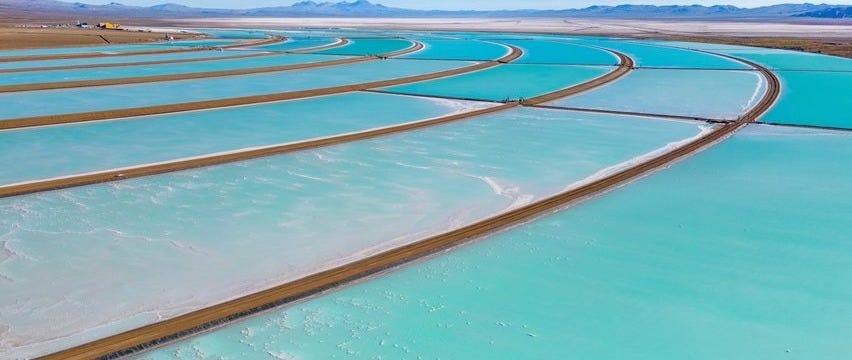
Lithium Americas saw fresh volume after a rough 2025, with federal loan backing now reading less like subsidy and more like strategic insulation. MP Materials moved higher on heavy volume as US magnet offtake moved forward and “critical minerals” re-entered national security language. Uranium names like Uranium Energy Corp extended gains as fuel security continues to outrank price sensitivity. Meanwhile copper has reached its highest price, ever.
China is the quiet variable in every model. If minerals are leverage, there is little incentive to flood markets and suppress prices. Restricting supply hardens bargaining power. And in a world where every delay carries a security cost, time itself becomes expensive.
Tariffs matter here. Even the expectation of tighter trade rules raises the value of jurisdiction-safe supply. When imports get more expensive or less reliable, domestic projects don’t have to win on cost alone. They win on certainty.
Put it together and the signal is clear. Markets aren’t betting on a commodity spike. They’re pricing control, location, and alignment. In a world where energy and minerals are back in the security column, that premium makes sense.
Why One-off Federal Investments Won’t Make or Break US Critical Mineral Supply - Resources Magazine
A recent analysis makes a fair technical case: one-off federal investments won’t suddenly make the U.S. competitive across every critical mineral supply chain. Mining is capital-intensive. Processing is expensive. Equity stakes alone don’t rewrite global price dynamics.
“Recent federal actions to support the burgeoning US critical minerals industry lack a clear strategy to address national security and short-term priorities… and raise several economic questions about long-run durability, competitiveness, and cost-effectiveness.”
That critique matters if the goal is clean economic optimization. But that’s not the operating environment anymore.
The article itself draws the most important line, even if it stops short of fully embracing it. Where the government paired equity with price support and long-term offtake, the intervention matched the moment.
“While interviewees generally viewed the deal with MP Materials as a national security priority and therefore a necessity, the deals struck with other projects—such as Lithium Americas, Trilogy Metals, and Vulcan Elements—prompted more questions. Some voiced concern over whether the decisionmaking was based on robust techno-economic and environmental impact analyses, if a compromise was struck on investing in more strategic projects in favor of immediate solutions, and the connections between the administration and selected projects.”
That contrast doesn’t argue against intervention. It clarifies which tools actually work when time and security matter more than near-term efficiency.
What’s changed since many of these policies were conceived is context. Venezuela. Tariffs. Record copper prices. China regularly using export controls, even if they have ceased for now. These pressures are landing at once. In that environment, waiting for perfect techno-economic alignment isn’t neutral.
The US government is making moves that favor the stick over the carrot, meanwhile:
Experts also agreed on the need for bilateral and multilateral international agreements, especially with allies like Australia and Canada, as the United States has limited mineral-processing capabilities.
Podcast Pick - Venezuela: Trump’s pipeline dream? - Reuters
Worth a listen if you want the market-level view of how Venezuela could rewire energy flows.
“U.S. action in Venezuela sets the stage for a major shift in global energy flows. But rebuilding Venezuelan output from 900,000 barrels per day to its former glory will take years, billions of dollars, and political stability that’s still far from certain.”
This episode is a clean way to connect geopolitics to on-the-ground implications without getting ideological. It reinforces the weekly theme: energy security is operational, and the grid clock doesn’t stop while the world gets loud.
Final Thoughts
This week was a reminder. Markets move on headlines, but systems move on build rates.
We can argue about energy, or we can execute it.
Reliable power. Clear communication. Veteran execution.